December 22, 2025 · 8 mins read
Santosh Kumar
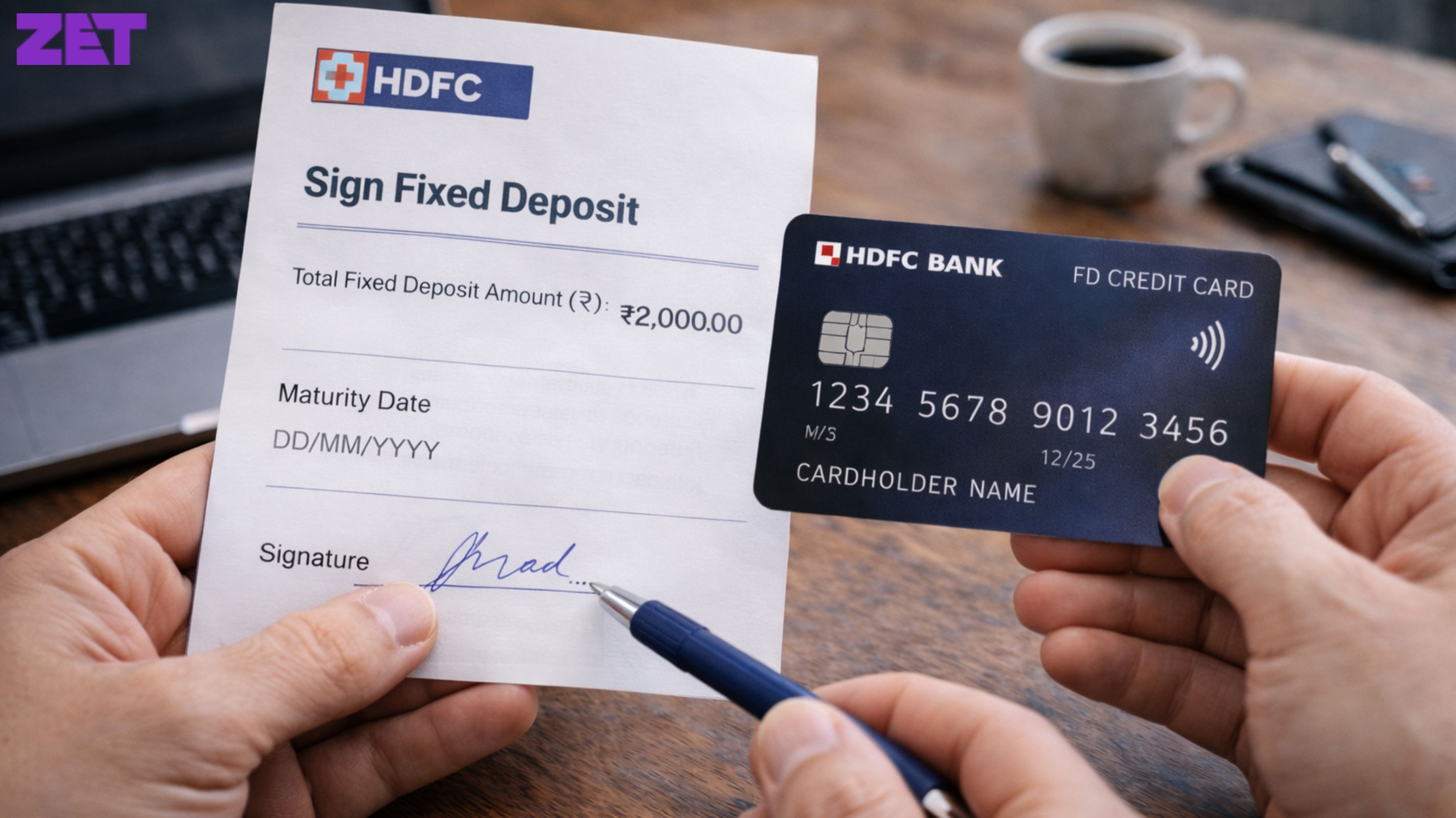
For most Indians, a credit card is a rite of passage. It means independence, confidence from a bank, and the ability to smartly budget. But for students, new earners, freelancers or anyone with a thin or no credit file, getting approved for a regular credit card can be surprisingly difficult. This is where the concept of a credit card on a ₹2,000 FD makes an appearance.

With a credit card backed by a mini FD, you can start your credit life even without a fat paycheck, extensive time on the job, or stellar credit report. With just ₹2,000 locked in as a fixed deposit, you get access to a live credit card and build your profile.
This guide explains how a credit card on a ₹2,000 FD operates, its ideal candidates, pros and cons, and how it can support you in moving towards an unsecured credit card down the line.
A credit card against a deposit is a secured credit card. Rather than your income or credit history, the bank secures your loan with your fixed deposit. Because the deposit reduces the lender’s risk, approval is easier and faster.
In fact, if you open an FD of Rs 2,000 with a bank that offers FD-backed cards, the bank prints you out a card with a limit based on that deposit. Typically, the credit limit is between 75 and 100% of the FD value. In which case, they may have a credit limit of ₹1,500 – ₹2,000.
And while they’re secure, these cards function just like regular credit cards. You can potentially use it for online shopping, UPI payments anywhere, subscriptions, utility bills, and even international transactions based on the card variant.
Some Indian banks and fintech platforms have lowered the bar to enter in order to lure newcomers into the formal credit system. And while certain banks continue to require larger deposits, many of them now offer FD-backed cards starting at ₹2,000 or ₹5,000.
This is a godsend for students, homemakers, gig workers, and folks who have been declined because they don’t have a credit history. A CC on a low FD amount gives you a disciplined, low-risk way to get a taste of credit use without the financial strain.
Also Read: How to Create a UPI QR Code for Your Shop or Business?
A credit card on a ₹2,000 FD is ideal for novices. For upperclassmen who aren’t yet earning a steady paycheck, this is frequently their sole choice. Freelancers and self-employed individuals who wrestle with income paperwork can also gain.
It’s additionally great for credit-impaired folks looking to boost their score back up. Since acceptance isn’t closely linked to your credit history, it offers a blank canvas with minimal risk.
Also Read: How to solve ‘UPI ID Not Found’ error?
Obtaining a credit card on a ₹2,000 FD is quite easy. You begin by choosing a bank or platform that offers low-value FD-backed credit cards. Once the standard KYC paperwork is out of the way, they open a fixed deposit in your name. This deposit remains locked in as long as the credit card remains active.
And once the FD is created, the bank issues the credit card against it. Almost always, the approval is quick because the deposit is its own collateral. You receive the card and access it right away, generally within a couple of days.
If you ever close the credit card, the FD is unfrozen, with interest compounded.
Also Read: UPI vs Wallet Payments: Which One Should You Use?
And even though the limit might be minuscule, how you use this card is one of the most
important signals sculpting your credit profile. On-time payments are king. Paying off your credit card bill in full before it’s due creates a robust repayment history.
It’s also wise to stay low. Even if your credit limit is ₹2,000, don’t always use over thirty per cent of it. This demonstrates financial prudence and improves your credit score consistently.
With time, good usage and responsible repayment can even help you earn a larger credit limit, or even an unsecured card.
Also Read: What Is UPI 123Pay and How to Use It Without Internet?
Accessibility is the biggest benefit. You don’t require a bloated income, a salaried job, or an extensive credit history. The fixed deposit replaces all these needs.
Another benefit is safety. Since the deposit is a backstop, banks are happy to approve applicants, and users don’t blow cash because the credit line is capped.
These cards also help you build or rebuild your credit score. Every on-time payment goes directly to credit bureaus, slowly building your credit file.
They also usually come with vanilla rewards, online transaction support, and the ability to issue them for everyday spending, on most FD-backed credit cards.
Also Read: How to File NIL GST Return Online
While these cards are convenient, they do have their disadvantages. Credit cap’s low, which may not be enough for big buys. A few cards may also have weaker reward benefits than premium unsecured cards.
Your FD remains locked, and you can’t withdraw as long as the card is activated. If you’re short on emergency reserves, this illiquidity might be a negative.
But to beginners, these problems are often outweighed by the advantages of building credit.
Also Read: GST For Home-Based Businesses: Do You Need It?
It’s in this space that fintech platforms have played a pivotal role in the last few years in offering convenient access to a card supported by small fixed deposits. One such example is the ZET Credit Card, which partners with banks to help users discover credit card options suited to their eligibility.
ZET, meanwhile, is focused on simplifying the application process and promoting education on responsible credit habits. Whether you need a small fixed deposit or want to get a credit card, platforms like ZET can help you compare options, understand terms clearly, and save you from unnecessary rejections. This tip comes in especially handy for first-timers who can potentially get buried under the weight of banking-speak.
Also Read: Documents Required for GST Registration for Different Business Types
A ₹2,000 FD cc is not an end-game. It is a stepping stone. After six to twelve months of responsible use, several banks evaluate your credit conduct and can offer you a raised limit or even a unsecured credit card.
At this juncture, you can either close down the FD-backed card and receive your deposit back or keep it along with a regular credit card. Either way, the initial deposit serves its purpose, providing access to mainstream credit products.
They believe that small deposit bank-backed credit cards are crappy or don’t count. This is not true. These cards report to bureaus just like any other credit card.
A low credit limit can’t increase your score. But in reality, credit score maximization is much more about payment habits than credit ceiling.
Also Read: What Is GSTIN? Format, Structure, and Meaning Explained
Yes, a few banks and fintech partners in India offer credit cards against fixed deposits from as little as ₹2,000. Approval depends more on KYC completion than on income or credit.
Yep, assuming the card reports to credit bureaus and you pay on time, it does a long way to build or boost your credit score.
Right, after you snuff out the card and cover your charges, the FD unbonds you with passion.
You can even scale the credit limit by topping up your FD. Some banks may even offer upgrades based on good usage behavior.
Some cards are always free, others may carry a nominal annual fee. This varies by issuer, and should be confirmed before applying.
Absolutely. A secured card gets you into the system safely and creates a footprint, which is better than no footprint.



Contact

care@zetapp.in
Social


Build and Maintain a 750+ Credit Score