December 19, 2025 · 8 mins read
Santosh Kumar
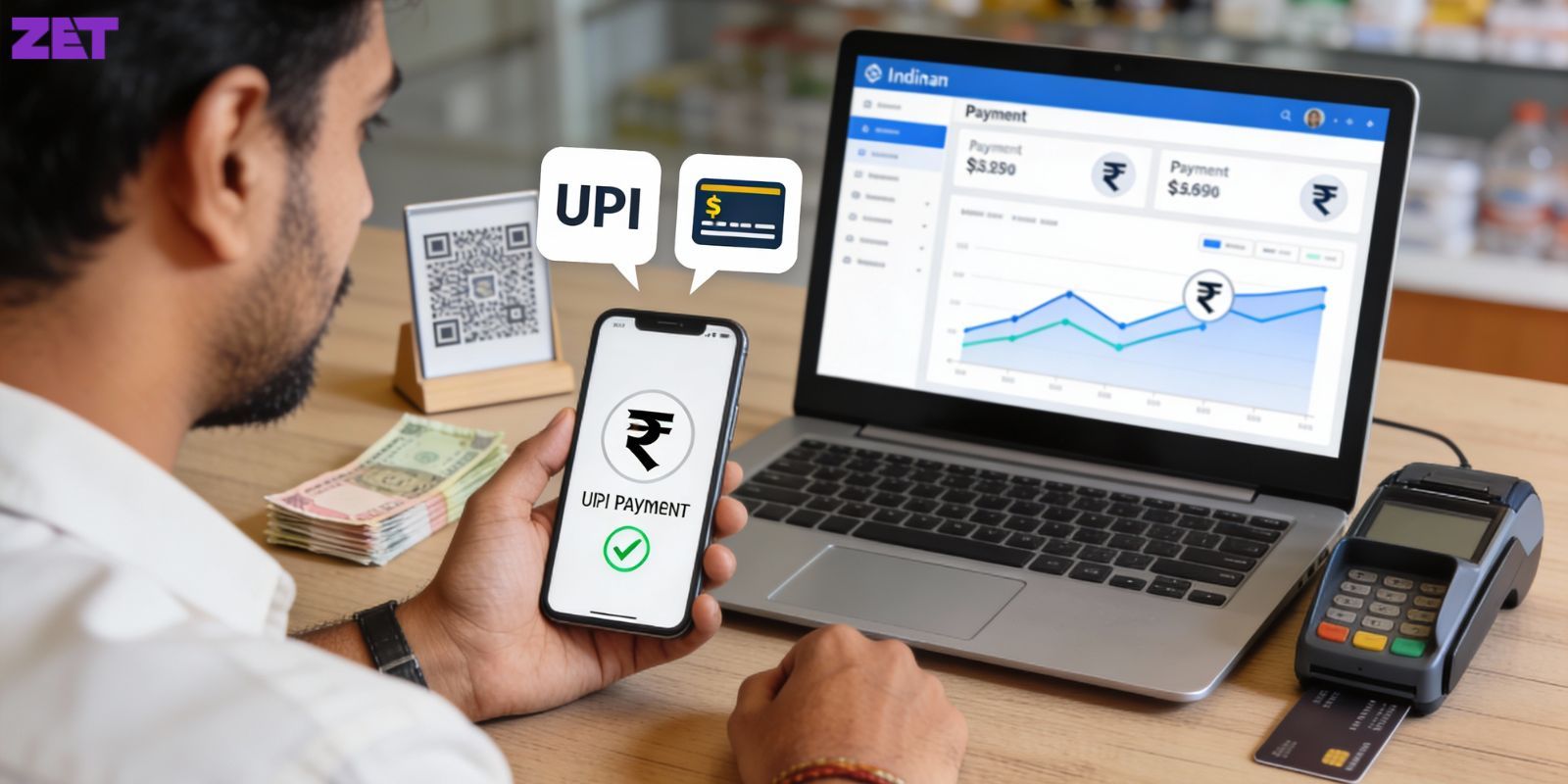
Digital payments aren’t a nice-to-have anymore for merchants. They are an expectation. As a kirana store, a digital-first brand, a service provider, or an expanding e-commerce shop, your shoppers demand fast, safe, and convenient payments. Of all these options out there today, two solutions popularize dialogues in India – UPI and payment gateways.

A lot of merchants get flummoxed when deciding between these options. A few others depend exclusively on UPI for its convenience and affordability. Others add a full-fledged payment gateway to support cards, wallets, and international payments. The UPI vs payment gateway discourse isn’t about which one is better, but which one works best for you as a business.
UPI changes the flow of money in India. For merchants, UPI provides a quick and low-cost method to receive digital payments directly into a bank account. Payments occur instantly, with no middleman holding money or delaying settlement.
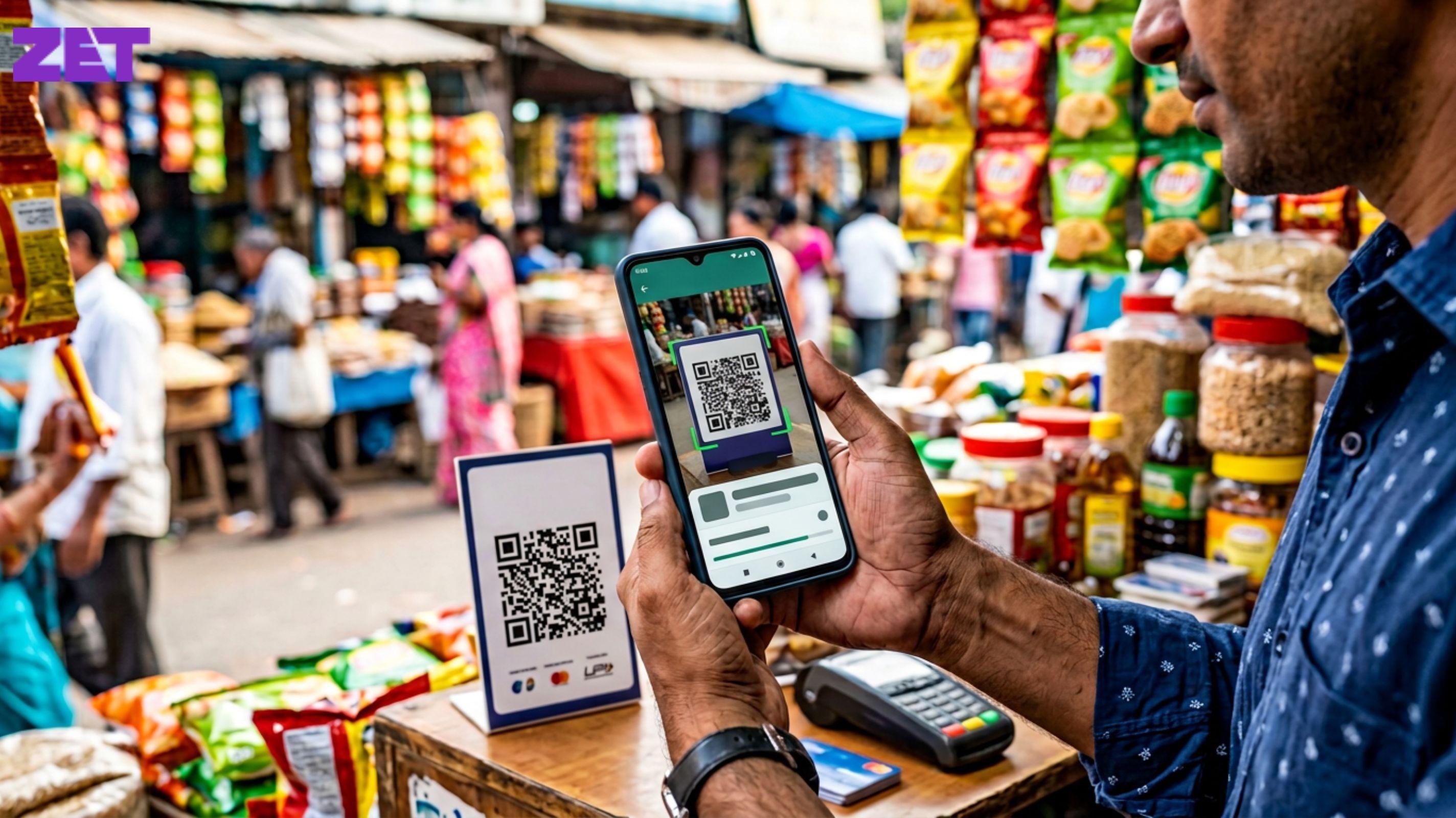
From a merchant’s perspective, UPI is simple to implement. A quick QR code, a linked bank account, and a registered mobile number tend to be all that’s needed. Consumers transact through popular apps like Google Pay, PhonePe, or Paytm, and the funds are delivered to the merchant nearly immediately.
UPI has been a hit among small and medium businesses. Street vendors, neighborhood stores, freelancers, and service providers have eagerly adopted it because it cuts back on cash reliance while maintaining low fees. Generally, no setup fees and often, no transaction fees!
Also Read: What Is UPI 123Pay and How to Use It Without Internet?
A payment gateway is a technology platform that allows businesses to take various types of digital payments online. It’s the intermediary between the consumer, the merchant, and the bank. Once a customer pays, the gateway safely handles the transaction and gets the money to the merchant.
Also Read: How to File NIL GST Return Online
At the core of the UPI vs payment gateway distinction is a basic differentiation in scale. UPI is a payment method. A payment gateway is a payment architecture.
UPI emphasizes direct bank-to-bank transfers. Payment gateways center on servicing multiple payment options via a single offering. One is simple and transactional. The other is complete and working.
By understanding this difference, merchants make wiser choices instead of assuming that one has to replace the other.
Also Read: GST For Home-Based Businesses: Do You Need It?
Price is usually the first thing merchants think about. UPI is extremely cost-effective. Most merchants don’t pay a transaction fee for UPI payments. That’s optimal for businesses with slim margins or a large volume of small transactions.
Payment gateways, however, also typically take a per-transaction percentage. This charge is different for each payment type. Card payments are likely to be more expensive, and UPI payments through a gateway may be less costly but not free. Other portals impose setup fees or yearly maintenance fees as well.
For a small merchant, these fees can accumulate. For a bigger company, the charges are typically worth the ease, automation, and user experience.
Also Read: Documents Required for GST Registration for Different Business Types
UPI wins hands down on ease of setup. Most merchants could go live with UPI payments within a day. With very little documentation and no technical understanding needed. Even offline merchants can accept UPI without any digital infrastructure.
Payment gateways are more involved to set up. Merchants have to provide business paperwork, undergo KYC verification, and embed the gateway into their site or app. This can be a days-long process requiring developer assistance.
Once established, though, payment gateways provide a slicker experience for merchants processing high transaction volumes. Automation minimizes effort and mistakes.
Also Read: What Is GSTIN? Format, Structure, and Meaning Explained
Users readily scan QR codes and approve payments in seconds. For face-to-face payments and immediate online payments, UPI just feels organic.
But UPI is not every customer’s cup of tea. Others want to use credit cards to earn rewards. Others use EMI options or international cards. Payment gateways address this need by providing multiple payment options under one roof.
A business with a wide customer base might discover that UPI-only conversion constrains conversion. Here, a payment gateway delights customers and eliminates abandoned transactions.
Also Read: GST for E-Commerce Sellers: Rules & Compliance Checklist
UPI payments usually settle within minutes or hours. This fast access to capital aids merchants in cash flow management. No waiting, no settlement cycle to follow.
Payment gateways generally have settlement cycles. Money could be deposited in the merchant’s bank account within a day or two. Though this lag is acceptable for mature companies, it’s problematic for small vendors who need daily cash.
This distinction is crucial, especially to small businesses with limited cash flow or that require rapid access to cash for inventory and expenses.
Also Read: Annual Fee vs Lifetime Free Cards
UPI and payment gateways are both regulated and safe. UPI transactions are highly secure as they require customer authentication through UPI PINs. Fraud rates are low with good user practices. Payment gateways are PCI-compliant and employ encryption, tokenisation, and fraud detection systems. For merchants processing sensitive customer information, gateways provide an additional layer of security and compliance assistance.
For offline or small merchants, UPI security is typically enough. For web-based companies gathering customer information, payment gateways provide more full-fledged protection.
Also Read: Credit Card Cash Advance
Scalability, however, is where payment gateways shine. As a business scales, so do its payment requirements. Subscription billing, recurring payments, international sales, and advanced reporting come into play.
UPI is awesome for now, but it doesn't have a lot of headroom. It doesn’t have anything like automated refund, chargeback, or subscription billing.
Payment gateways that grow with your business. They offer APIs, analytics, and integrations that facilitate growth without interruption.
Also Read: Credit Card Renewal & Replacement
For service providers, UPI is easy, inexpensive, and popular. The cheap and immediate settlement makes it perfect for daily transactions.
For online retailers and digital-first brands, payment gateways are often a better fit. They facilitate many ways to pay and boost customer confidence.
UPI requires merchant compliance. A simple KYC and bank account check is typically sufficient. Payment gateways need additional documentation like business registration certificates, tax information, and compliance verifications.
Also Read: Types of GST Registration in India
The UPI vs payment gateway debate is not for eternity. It’s about selecting what suits your business at a given point.
UPI is magic for simplicity and cost-effectiveness. Payment gateways are vital for flexibility, scalability, and consumer choice. Most successful merchants utilize both strategically instead of restricting themselves to one.
UPI and payment gateways both serve important functions in India’s digital payment landscape. For merchants, the correct answer varies based on company size, customer taste, number of transactions, and expansion plans.
If you’re a small merchant looking for fast payments and low fees, UPI might be all you require. If you operate an online or scaling business that needs multiple payment options and automation, a payment gateway is worth it.
Knowing the pros and cons of each assists merchants in making the right choice for their business as opposed to jumping on every bandwagon. After all, the optimal payment solution is one that backs your business now and sets you up for the future.
UPI is exclusively a bank-to-bank payment; a payment gateway allows card, UPI, and net banking via one platform
In most cases, yes. UPI transactions generally don’t incur merchant discount rates, so it’s a cheap way for small businesses to accept payments.
Yes. Most gateways support UPI, cards, and other modes of payment. But gateway-based UPI payments can still be charged.
For online businesses, payment gateways are typically better because they provide multiple payment options, superior reporting, and scalability.
Yes. Numerous merchants deploy UPI for direct payments and a payment gateway for card payments and overseas customers.
Yes. Well-known payment gateways adhere to rigorous security and compliance protocols to safeguard transactions and consumer information.
Payment gateways frequently increase trust for online shoppers because of familiar checkout experiences, brand awareness, and diverse payment options.



Contact

care@zetapp.in
Social


Build and Maintain a 750+ Credit Score