December 11, 2025 · 10 mins read
Santosh Kumar
Credit cards are financial cards that give us the privilege of shopping now with flexible pay later options, even with zero down payment. The amount can be repaid as a whole or in equated monthly instalments. Apart from shopping, credit cards give us a myriad of benefits like cashbacks, discounts, rewards, etc. Credit cards are a boon to modern society, as they give us the convenience of using them anywhere and anytime. Credit cards help to increase our credit score and creditworthiness and are the best alternatives to cash payments.

To get the optimum benefits from credit cards, users must know how to use them wisely and pay their bills on or before the due date. Users must also know what the billing cycle is for a credit card.
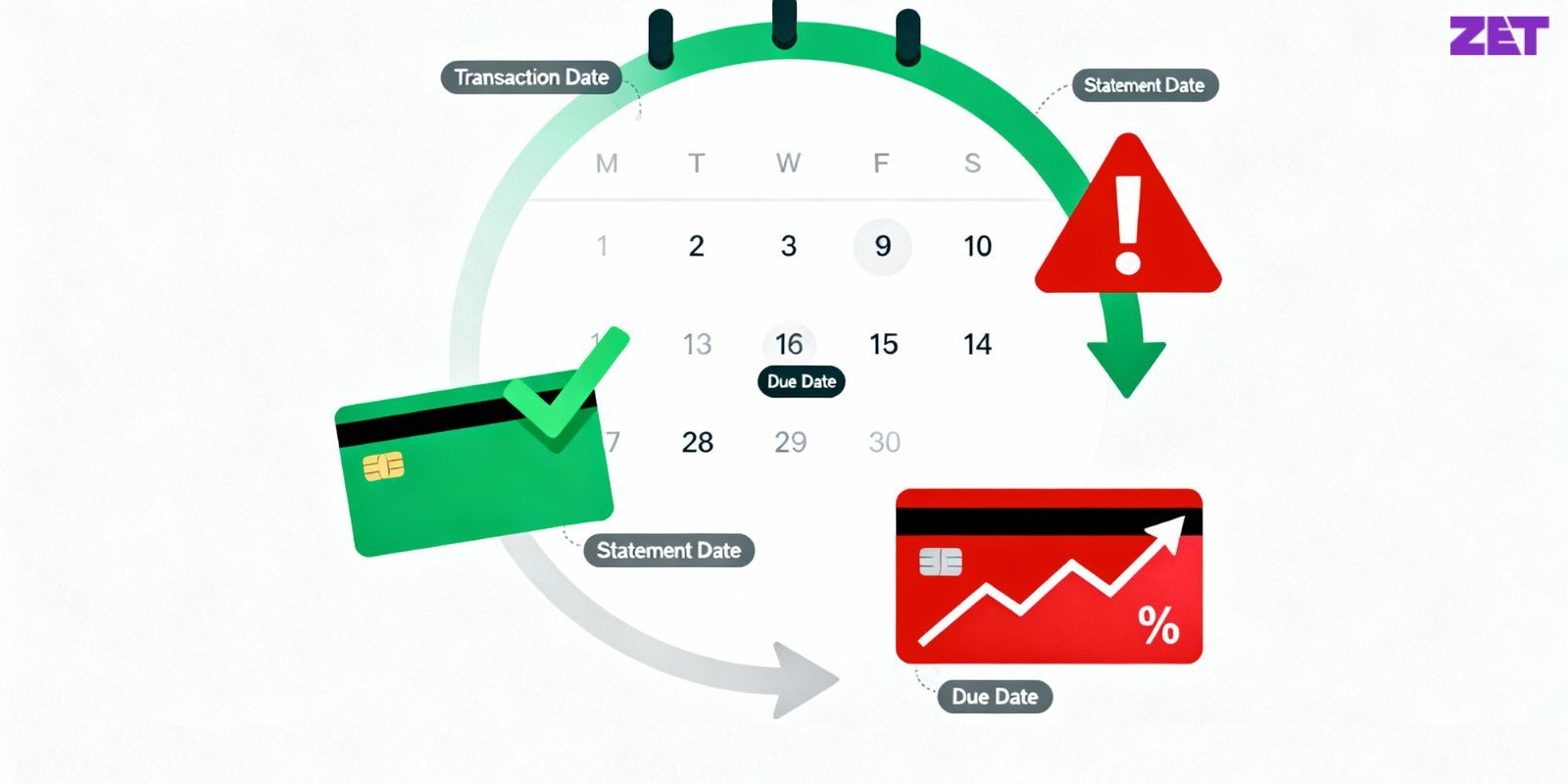
Credit card billing cycles are periods, approximately 28 to 31 days, between statements of all the transactions within that time period. Credit card billing cycles can start on any day of the month and end within 28 to 31 days, as fixed by the credit card issuers. At the end of the billing cycle, users get the statement reflecting the total amount due and the last day to settle the dues. It is advisable to pay off the total amount of credit card outstanding within the due date to avoid extra interest and hefty fines later on.
Now that users know what a billing cycle in a credit card is, we should also know how credit card billing cycles work.
Credit card users must have a thorough understanding of credit card billing cycles so that they can plan their finances well in advance and avoid a huge debt burden. A thorough understanding of the billing cycle is also important so that users can make a budget plan in advance. Though credit card billing cycles have no direct impact on credit scores, if users are not able to manage their credit card billing cycles and are not able to pay credit card dues on time, this will definitely have a negative impact on their overall credit score. All transactions that happen during a particular billing cycle will be shown in that particular credit card statement.
Credit card billing cycles typically start as soon as the credit card is activated. Starting from the very first transaction that we do with the credit card, any EMIs that we pay through our credit card or any cash withdrawals through the credit card are recorded in the credit card bill and included in the credit card billing cycle. Credit card billing cycles occur every 25-30 days.
Also Read: What is UPI 2.0?
A credit card bill usually includes the date when the bill is generated and the due date by which the bill must be settled. The time between the bill generation date and due date is called the grace period, which is a period of about 15 to 20 days, depending on the credit card issuer.
The credit card statement also includes the minimum amount due. As the name suggests, it is the minimum amount users should pay with each statement in case they are not able to settle the bill fully. Paying the minimum amount due ensures users do not have to pay any penalty. They do have to pay interest on the remaining amount. A wise financial decision would be to settle the bills rather than pay just the minimum amount due.
Spending Wisely: One of the best ways to manage a credit card billing cycle is to avoid unnecessary expenses and spend within one's means.
Payment in Full: By making timely and full payments, we can effectively manage the credit card billing cycle and not end up paying more in interest.
Maximise Interest-Free Window: Bigger expenses or purchases can be done at the beginning of the billing cycle, so users get maximum time to repay them before their next credit card due date.
Changing Billing Cycle: Many banks and credit card issuers give us the option of changing credit card billing cycles. Users can change the billing cycle and set it to their own preferences, and keep it in accordance with their financial planning.
Set Up Payment Reminders: Users can set up payment reminders in the form of SMS or email so that they are notified of their payment due dates, and they do not miss important dates.
Review Statements with Each Billing Cycle: Users must know when their statements are expected to be generated, and they must go through their credit card statements as and when they are generated to check for any errors.
Keep Credit Utilisation Ratio Below 30%: The Credit utilisation ratio is calculated at the end of the credit card billing cycle. It is recommended to always keep a credit utilisation ratio of less than 30%.
Managing Multiple Cards: For users who have multiple credit cards, it is better to use separate cards for personal and business use to avoid unnecessary clashes with credit card billing cycles.
Also Read: How To Invest in Post Office FD?
Understanding how credit card billing cycles work and managing them effectively is the first step towards credit card literacy. Credit card billing cycles give us an idea of how to plan our earnings and avoid paying extra in the form of interest. Effectively managing credit card billing cycles will also help us build up our credit scores in the long run.
The ZET credit card by SBM is a significant tool for those individuals with limited or poor credit history or who have yet to build a credit history. ZET credit cards are secure, lifetime-free credit cards with no annual or joining fees. ZET credit cards are FD-backed credit cards that have guaranteed approval. These credit cards do not require any proof of income; the fixed deposit acts as collateral for these credit cards. The credit limit of ZET credit cards is set at up to 90% of the fixed deposit amount. Credit limits can be increased by increasing the fixed deposit amounts.
Thus, ZET credit cards give the dual benefits of having a credit card as well as earning interest up to 7% with fixed deposits. To avail ZET credit cards, users just have to open a fixed deposit account with an amount as low as Rs 5000. Like any other credit cards, ZET credit cards also offer an abundance of benefits to their users, including cashbacks, rewards, discounts, etc. ZET credit cards can be linked to almost all UPI apps, like Google Pay, etc.
Also Read: Can We Invest Monthly In FD?
In today’s world, where more and more people rely on credit cards for their day-to-day transactions, it is mandatory that we know what a billing cycle in a credit card is and how credit card billing cycles work.
A credit card billing cycle is the time frame of usually 28 to 31 days between recurring billing statements. At the end of each billing cycle, a statement is generated that has records of all transactions done in that time period. These transactions include all transactions made using credit cards, any cash withdrawals using credit cards, and any credit card EMIs. Credit card users are required to pay the balance amount within the due date mentioned in the bill to avoid extra payment in the form of late fees, interest, or fines. In some cases, users can also pay the minimum amount due so that they do not have to pay the late fees, but have to pay interest on the remaining amount.
Thus, by effectively managing credit card billing cycles, we can build up healthy credit scores in no time, avoid late fees and plan our finances better, as well as obtain maximum benefits from our credit cards.
A billing cycle for a credit card is the time frame of usually 28 to 30 days between two credit card statements, where each credit card transaction made during that period is recorded as a statement.
Credit card billing cycles are important tools for credit card users, as they help us to plan our budgets in advance, so that we do not end up paying more in the form of interest or late fees. Paying bills on time positively impacts our credit scores.
The interest-free period, or grace period, is the time between the billing cycle end and the payment due date, and it ranges from 20 to 50 days depending on different financial institutions. It is advisable to make bigger transactions during the early phase of the billing cycle to get the maximum interest-free period.
The Reserve Bank of India has given credit card users the option to change their billing cycle at least once, in accordance with their cash flow dates, so that they can make timely payments.
If users pay only the minimum amount due with each billing cycle, they may not have to pay late fees, but they will have to pay interest on the remaining amount, which may pile up with each billing cycle and result in a heavy debt burden. This will also have a bad impact on the credit score.
Different financial institutions have different credit card billing cycles. In India, the typical duration of a credit card billing cycle is usually between 28 and 31 days. All transactions done during this period are recorded in a statement and sent to the credit card user.



Contact

care@zetapp.in
Social


Build and Maintain a 750+ Credit Score