December 17, 2025 · 10 mins read
Santosh Kumar
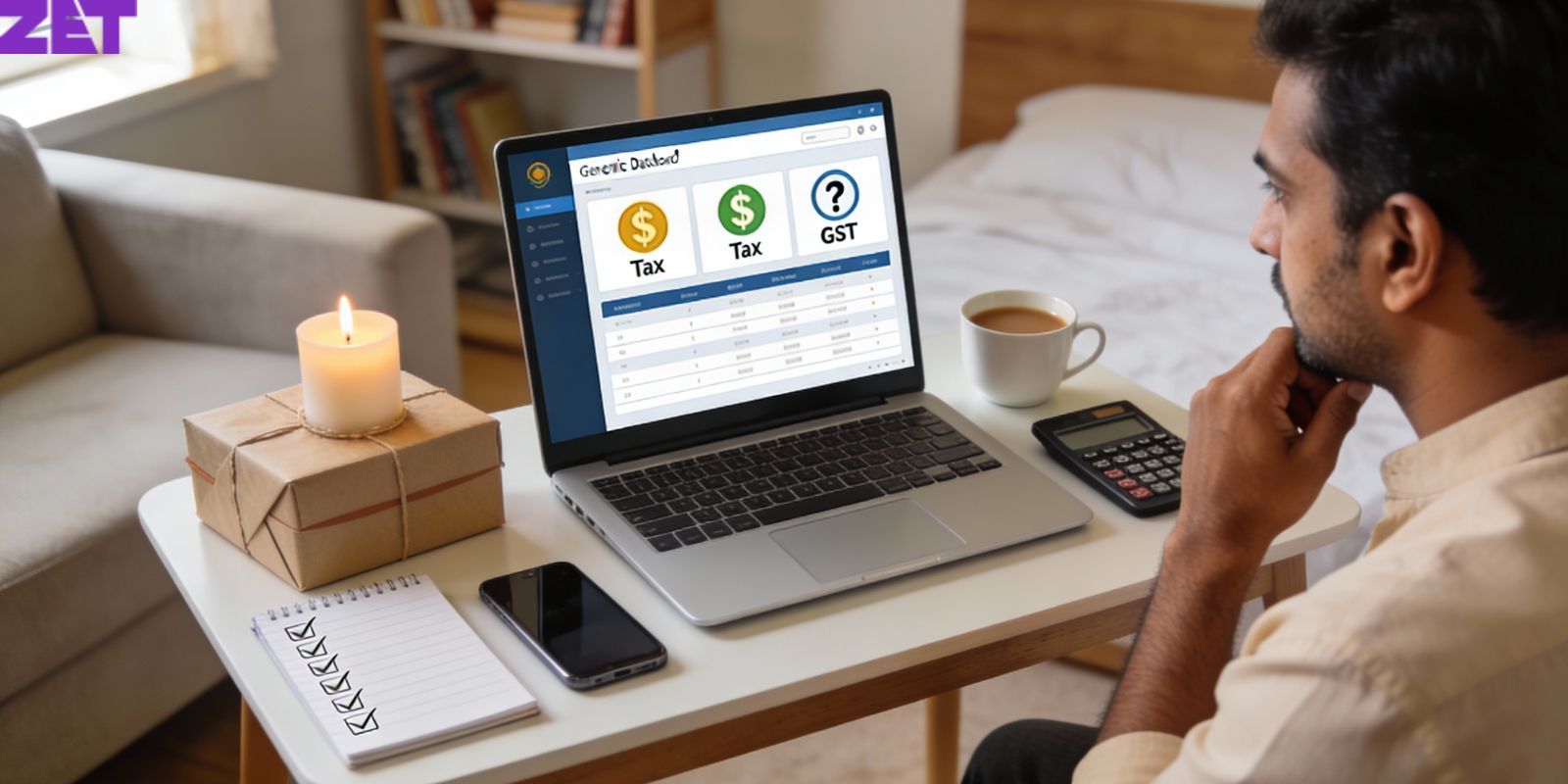
Around India, running a home-based business has become the norm. From miniature catteries and independent artisans to virtual instructors, gig workers and home-based boutiques, individuals in every corner of the country are realising that generating revenue at home is not just feasible but increasingly accessible. As this space continues to grow, one question persists: Do home-based businesses require GST registration?

It’s not always a simple yes or no because GST rules are dependent on turnover, the type of business activities and where and how you sell. Most homepreneurs aren’t quite sure when they need to register, what paperwork is involved, and what compliance responsibilities GST introduces. Here’s all you need to know about GST registration for home-based businesses – helping you determine whether you need a GST number, and if it’s even good for your business.
GST stands for Goods and Services Tax, levied on the supply of goods and services in India. Whether your business takes place at a commercial office, a retail store or from a tiny corner of a living room, the tax laws apply equally. What changes is the business model and how the rules play out.
A lot of home-based businesses forget to register because, well, they’re a home-based business or they don’t have a shop. This is not true. GST laws are based on turnover thresholds and the nature of business activities, rather than where you operate. Home-run businesses are subject to GST in the same way as any other business.
It’s a two-pronged test that determines whether a home-based business requires GST. One is the government’s compulsory specification. The other is optional registration by homepreneurs who need more legitimacy or plan to expand. Knowing them both helps you decide!
Also Read: Documents Required for GST Registration for Different Business Types
Turnover threshold is the golden rule in GST. In most states of India, a business providing goods needs to register once its annual turnover crosses Rs. 40 lakh. For service providers or mixed supplies, the limit is 20 lakh. In special category states, reduced thresholds are applicable.
A lot of home businesses end up outgrowing their anticipated pace of growth. Even a tiny food business that starts with just neighbourhood orders can get to the limit fast. In fact, a freelancer at home might not even think of that service income as being the same as income earned in a formal office. After the turnover threshold is crossed, GST registration becomes mandatory and inescapable.
There are also instances where GST registration is compulsory even with low turnover. One of the most obvious examples is when you sell products via e-commerce. It mandates registration for anyone selling on marketplaces like Amazon, Flipkart or Meesho. No matter what your income, location or scale. So a work-at-home vendor selling hand-rolled candles or jewellery on an e-marketplace must register for GST, even if they make peanuts.
The other is when the business delivers products or services beyond its home state. Inter-state supplies almost always require GST registration. A home-based business that mails orders to customers out of state would be required to register. There are exemptions for service providers under new rules, but the idea still applies that the interstate movement of goods attracts GST to the business.
However, if a home-based entrepreneur employs people, purchases from registered vendors, collaborates with corporates or supplies to GST-registered clients, registration can also become mandatory. A lot of companies like to deal with registered businesses as it enables them to claim input tax credit. Consequently, home businesses that desire corporate customers frequently choose GST first.
Also Read: What Is GSTIN? Format, Structure, and Meaning Explained
The GST registration process is all online and pretty simple. Home businesses must submit an identification, business information and documentation of the home as the primary business location.
Identity proof is generally a PAN card and an Aadhaar card. Personally, you’ll need a picture of the entrepreneur. Proof of place of business can be an electricity bill, water bill or property tax receipt for homeowners, or a rental agreement and permission letter if you rent.
Bank account details, like a cancelled cheque or bank statement featuring the owner’s name, should also be uploaded. These documents assist GST authorities in validating the fact that the home-based business is genuine and actually based at the mentioned address.
Also Read: GST for E-Commerce Sellers: Rules & Compliance Checklist
Because most home-based entrepreneurs think GST registration is complicated or not needed at first. But in reality, signing up often opens up a variety of options.
Trust is the greatest benefit. When clients and customers see a GST number on invoices, they trust the business. This faith can assist the company in expanding beyond local circles.
GST registration enables businesses to claim input tax credit as well. Any GST paid on raw materials, packaging, transport, equipment or business purchases can be offset against the GST the business collects on sales. This lowers aggregate tax pressure and helps scale be more cost-effective.
Home-based businesses that want to scale via e-commerce platforms cannot without GST. Online marketplaces will ask sellers for a GST number at onboarding. Without registering, your business is stuck with local offline customers.
A few home-based businesses additionally discover that GST registration simplifies securing loans, opening business bank accounts or courting institutional clients. In an increasingly formalised world where scale can only be achieved through formalised means, GST registration frequently proves to be the first step towards sustainability.
Also Read: Annual Fee vs Lifetime Free Cards
Although GST is advantageous, it comes with obligations that home-based entrepreneurs need to understand prior to registering.
Monthly and quarterly return filing is one of the biggest hurdles. Businesses have to file returns even if there are no sales. This can be intimidating for home entrepreneurs new to taxes. Even if you pay an accountant or use software to track this, it still adds a routine administrative chore. Maintaining organised accounts becomes important. A home-based business can’t mix personal and business uses after it’s registered. Invoices must be issued correctly. Costs must be documented directly. Taxes have to be paid on time. Some home businesses fight this at first before mastering how to handle it efficiently.
Another problem is that GST makes items or services more expensive. This can impact small businesses serving price shoppers. But discerning or convenient customers also don’t mind GST. Even with these difficulties, many home operations believe the business and accounting benefits of GST registration likely exceed the hardships, particularly when preparing to expand.
Also Read: Credit Card Cash Advance
Not all home entrepreneurs must register. But a lot do it anyway, especially when they want to grow their customer base or work with bigger clients. Optional enrollment provides them with similar rewards as enterprise firms.
It permits them to take input tax credit on purchases. It assists them in building a professional reputation. It also sets them up for future growth since they begin learning how to do compliance early. And it allows them to sell anywhere in India, without limitations.
But voluntary registration should be examined. The filing discipline is significant. A home business that doesn’t expect to grow quickly can wait until turnover rises.
Those intending to utilise online marketplaces or target corporate clients typically consider voluntary registration a smart move, even if their turnover remains modest.
Also Read: Credit Card Renewal & Replacement
And once a home business signs up, it has to invoice GST-compliantly for each sale. These invoices should have the GSTIN, invoice number, description of goods/services, tax rate and amount. This doesn’t imply that invoicing gets complex. Some nice little tools/apps that aid small businesses in creating compliant invoices quickly.
The business must also keep purchase and sales records. These invoices are necessary for filing returns and claiming input tax credit. Keeping basic spreadsheets or using accounting software is generally sufficient.
Home entrepreneurs need to get GST returns in on time. Filing late leads to penalties and even blocks the capacity to create e-way bills. A lot of businesses file through service providers or automatically, so they don’t miss or make errors.
Finally, it needs to pay the GST it collects from customers. This keeps you sane and stops you from getting hit with a big tax bill.
Also Read: Types of GST Registration in India
It’s up to you and your long-term intentions. If you want to keep things at a small local level and are not planning to work with corporates or sell online, you may not require GST registration right away.
But if you consider your home business as a long-term endeavour that will eventually become a full-fledged enterprise, GST registration is usually a good move. It establishes trust, lets you accept more sizeable orders and gets you ready to scale.
A lot of home businesses that start out as little experiments grow up to be serious affairs. Early registration lays the groundwork for momentum.
Home businesses pack a punch in India. They let people use their talent, innovation and tools without commercial offices or deep investment. Knowing your GST registration requirements is key to operating a compliant and sustainable home-based business.
GST registration for home-based businesses – depends on turnover, nature of activity, inter-state supplies and whether you sell on e-commerce platforms. Registration carries obligations, but it also provides legitimacy, entry to new markets and tax advantages. Whether you’re a home baker, freelancer, online tutor, craft seller or consultant, understanding your GST requirements means you can operate your business with confidence and compliance.
If you ever intend to expand, scale or formalise your business, a GST number is not just necessary. It becomes an advantage.
No. GST registration is only required when your turnover exceeds the mentioned limits or when your business is in categories that require compulsory registration, like selling goods online through marketplaces.
Yes. GST registration is mandatory for all e-commerce sellers, even those with zero income. Service providers get a few exceptions, but product merchants must sign up.
For you, they typically require PAN card, Aadhaar card, photo, bank statement or cancelled cheque and proof of site address for business address. If it’s a rented home, a rental agreement and permission letter might be required.
Yes, provided their revenue is under the limit, and they are not in a category mandated to register. Once their turnover crosses the threshold, GST registration is compulsory.
Yes. Any business may register voluntarily. It also assists in establishing credibility, asserting input tax credit and dealing with bigger clients. However, it also brings compliance obligations.



Contact

care@zetapp.in
Social


Build and Maintain a 750+ Credit Score