July 27, 2026 · 10 mins read
Think about getting a loan for your dream house, or an important expansion loan for your business, or a premium credit card – only to be instantly rejected by the loan or credit card provider. Ask for the reason behind the rejection, and the answer is a sobering three-digit number: a low CIBIL score. In today's financial world, your credit score is the one that acts like your financial passport. It is the first criterion that lenders use when evaluating your creditworthiness or your ability to repay the amount you borrow.
Your low credit score does not just cost you personal loans, business loans or a premium credit card that you had your eyes set on for a long time. It will also cost you lakhs of rupees in the form of unreasonably high interest rates.
People never purposely harm their credit health or CIBIL score. It’s often done completely by accident simply because most of the people do not understand the factors that constitute good credit health. In this guide, we will uncover the main structural reasons why your CIBIL score can be too low, how exactly it is calculated, and mistakes you have to avoid in order to keep it good.
Table of Contents:
1. Understanding the Baseline: What Constitutes A CIBIL Score?
2. Reasons Behind A Low CIBIL Score
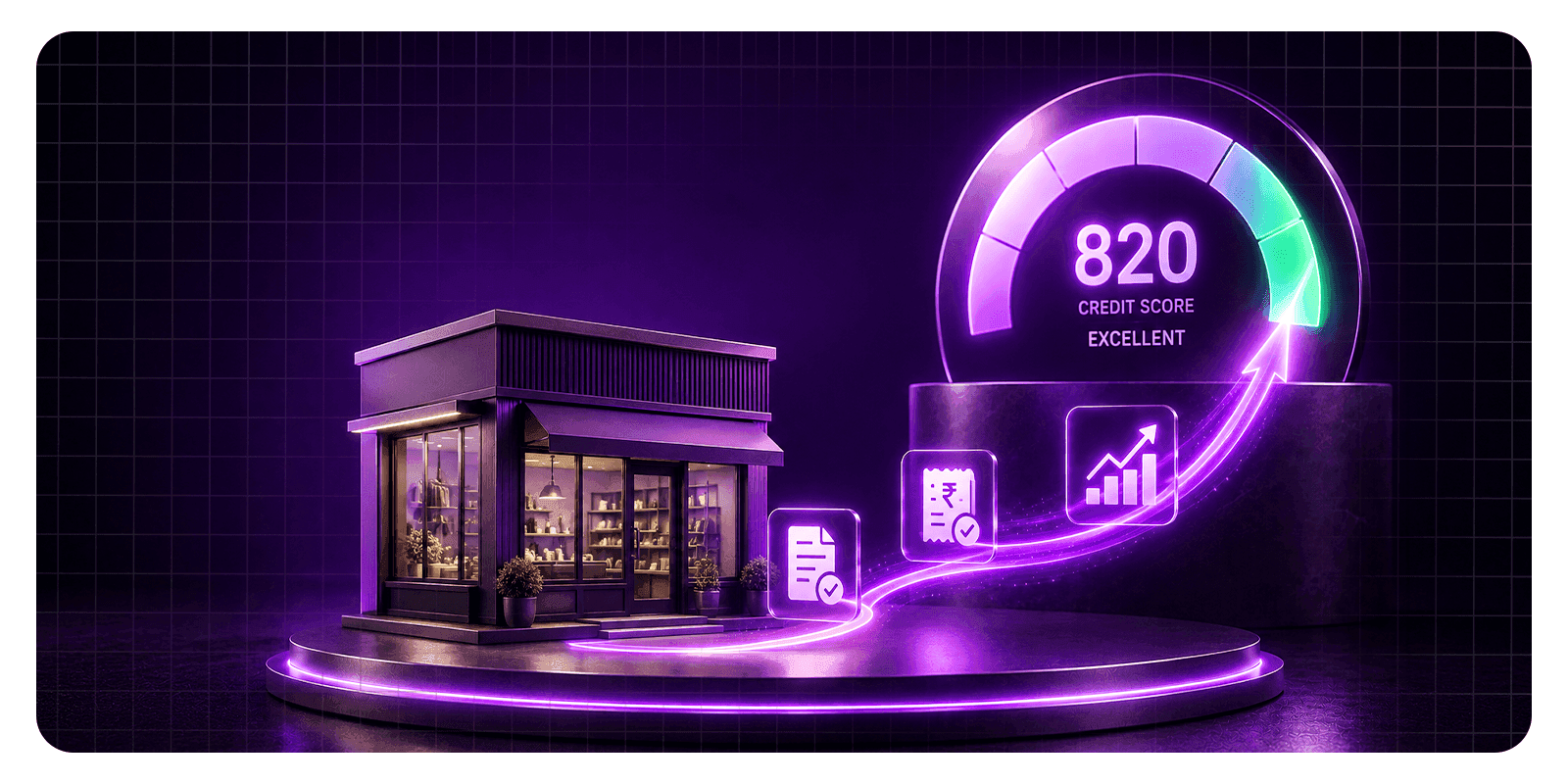
Before diagnosing the problems that contribute to a low CIBIL score, let’s first understand the metrics that construct a CIBIL score. TransUnion CIBIL calculates your score on a scale ranging from 300 to 900. A score of 750 or above is generally considered excellent, making you a highly desirable borrower for any financial institution. If your score falls below 650, it is flagged as risky.
Whenever you perform a quick CIBIL score check online, the three-digit number that appears on the screen isn’t just some random guess. It is actually built using an algorithmic weightage system based on your credit history.
1. Payment History (30%): Your history of paying off dues and bills on time.
2. Credit Utilization Ratio (25%): The amount of credit used in proportion to the credit limit available.
3. Credit Type & Duration (25%): The types of credit products available in your portfolio and the length of your credit history.
4. Other Factors (20%): Any factors that might include financial stress, including multiple inquiries, new credit accounts and others.
Now, let's move on to understanding the common reasons behind a low CIBIL score before you end up frantically searching for credit score kaise badhaye**’ on the Internet.
1.Delayed or Missed Repayments:
Delayed or missed repayments of your existing loans and credit card bills are the primary culprits in lowering your credit score. Repayment history constitutes a massive part of your CIBIL score (30%). When you skip an Equated Monthly Instalment (EMI) or a credit card bill repayment, the lender then reports this default to CIBIL after a grace period, which is typically 30 days.
This is then registered as a sign of financial stress and fiscal irresponsibility. It is not just about defaulting on repayments of huge amounts; consistently delaying paying off your credit card bills can also keep on chipping away at your credit score.
2.High Credit Utilization Ratio:
Your credit utilization ratio basically represents the proportion of revolving credit you use to the total available credit limit at your disposal. Ideally, the credit utilization ratio should not exceed 30%. Lenders and credit bureaus usually view a high credit utilization ratio (higher than 30%) as a sign of credit hunger or overdependence on credit.
For example, if your credit card has a limit of ₹1,00,000 and you regularly run up balances of ₹80,000, your CUR is 80%. Even if you pay off the full balance at the end of the month, the high balance reported on your statement date flags you as a high-risk borrower who relies too heavily on debt.
3.Credit Settlement vs Closure:
A lot of people end up falling into the trap of credit settlements. This happens when a borrower is unable to repay the borrowed amount for a prolonged period of time; the lender might offer a one-time settlement scheme. Under this agreement, the lender is open to accepting an amount usually lower than the borrowed credit and forgiving the remaining balance.
While this resolves your legal dispute with that specific bank, the lender reports the account status to CIBIL as "Settled" rather than "Closed". A "Settled" status is an immediate red flag for any future lender. It shows that you failed to honour your original contract, which can suppress your CIBIL score for up to seven years, making it incredibly difficult to secure new loans.
4.Credit Mix Asymmetry:
The type of credit mix you have constitutes 10% of your CIBIL score. Credit is divided into two categories: secured credit (loans backed by collateral) and unsecured credit (collateral-free loans and credit cards). A healthy credit profile usually features a balance of both secured and unsecured credit.
If your credit profile consists entirely of unsecured credit, it indicates that you are heavily dependent on high-interest consumer debt. You need to have a healthy credit mix in order to prove to lenders and credit bureaus that you can manage long-term asset creation alongside short-term credit lines.
| Credit Type | Examples | Impact Trend on Profile | | :---- | :---- | :---- | | Secured Debt | Home Loans, Property Loans, Car Loans | Favorable; signals asset building and stable long-term planning. | | Unsecured Debt | Personal Loans, Credit Cards, BNPL schemes | Neutral in moderation; risky if it dominates the profile completely. |
5.Being A Co-Signer or Guarantor:
Whenever you decide to co-sign a loan or act as a guarantor to help out your family or friend, you are not just doing a good deed but also accepting equal legal responsibility for that particular debt. CIBIL has a tendency to treat a co-signed credit account as your own obligation.
Even if it is the primary borrower who defaults or misses even one EMI repayment, it has a good scope to pull your CIBIL score down.
6.Multiple Hard Inquiries In A Short Window:
Whenever you decide to formally apply for a credit card or a loan, it always triggers a hard inquiry to perform your credit score check. A single hard inquiry will lead to a brief drop of a few points in your credit score, but multiple hard inquiries within a short period of time indicate that you are in a financial crisis and searching for loans frantically. This indirectly classifies you as a high-risk borrower.
7.Errors In Your Credit Report:
Whenever you decide to perform a quick credit score check and find out that your score is quite low for no reason, make sure that you do not leave without checking your credit report thoroughly. This is because, some of the times, your low CIBIL score could also be a result of clerical errors by banks or delays in administrative data uploading.
ZET Fixit is a credit report error resolution tool within the ZET app. It scans your credit report, identifies inaccuracies such as accounts you never opened, loans incorrectly linked to your name, or payment remarks that do not reflect your actual history and guides you through the dispute process step by step. ZET Fixit answers your most important question: credit score kaise badhaaye, and provides timelines, sends reminders, and tracks status until the error is resolved. Most disputes are corrected within 30 to 45 days.
Now that you have understood the most common reasons behind a low CIBIL score, you can move on to searching for ‘credit score kaise badhaaye’ on the Internet. Use reliable websites to implement the techniques to increase your credit score consistently.
Whenever you perform a quick CIBIL score check online and find that your credit score is quite low, don’t worry. A low CIBIL score is not a permanent life sentence that cannot be reversed. It is simply the result of bad financial habits that you followed in the past. Whether your credit score dropped due to an accidental late payment, an aggressive utilization of credit lines, or an unfair reporting error by a financial institution, the path to recovery starts with awareness.
Kickstart improving your credit score by searching for ‘credit score kaise badhaya’ and then check your credit report for any disputes or errors. Ensure that all of your credit card bills and loan repayments are automated so that you never end up missing out on them. Keep your credit utilization ratio below 30% and never apply for multiple loans or credit cards all at once. Rebuilding your credit/CIBIL score might take some time, but when you get seamless access to affordable credit, it all ends up being worth the effort.
1. What is a good CIBIL score for getting a loan?
A CIBIL score of 750 or above is generally considered good by most lenders. A higher score improves your chances of getting loans and credit cards at better interest rates and with faster approval.
2. How can I do a CIBIL score check online?
You can complete a CIBIL score check online through authorized credit bureaus or trusted financial platforms that offer free or paid credit score services. Regularly checking your score helps you track your credit health and identify any errors.
3. How often should I check my credit score?
It is recommended to perform a credit score check at least once every three to six months. Regular monitoring helps you spot inaccuracies, detect fraudulent activity, and understand how your financial habits affect your score.
4. Why did my CIBIL score drop even though I paid my bills?
Your CIBIL score may still decrease due to factors such as high credit utilization, multiple loan applications, a recently closed credit account, or delays in lenders updating your payment information to the credit bureau.
5. Does checking my own CIBIL score affect my credit score?
No. When you check your own credit score, it is considered a soft inquiry and does not impact your CIBIL score. Only lender-initiated hard inquiries during loan or credit card applications may slightly reduce your score.
6. Can a settled loan affect my CIBIL score? Yes. A loan marked as "Settled" instead of "Closed" can negatively impact your CIBIL score because it indicates that the full repayment terms were not honored. This remark may remain on your credit report for several years.



Contact

care@zetapp.in
Social


Build and Maintain a 750+ Credit Score