April 19, 2025 · 22 mins read
Santhosh Kumar

In a contemporary digital society, having a smartphone now qualifies as an essential rather than an exclusive possession. The dominance of mobile phones as key elements in daily activities leads numerous people to seek mobile loans to buy contemporary devices. Applicants seeking loan approval must demonstrate an acceptable credit score as a deciding eligibility factor. First-time borrowers commonly seek information about how much CIBIL score is required for mobile loan approval.
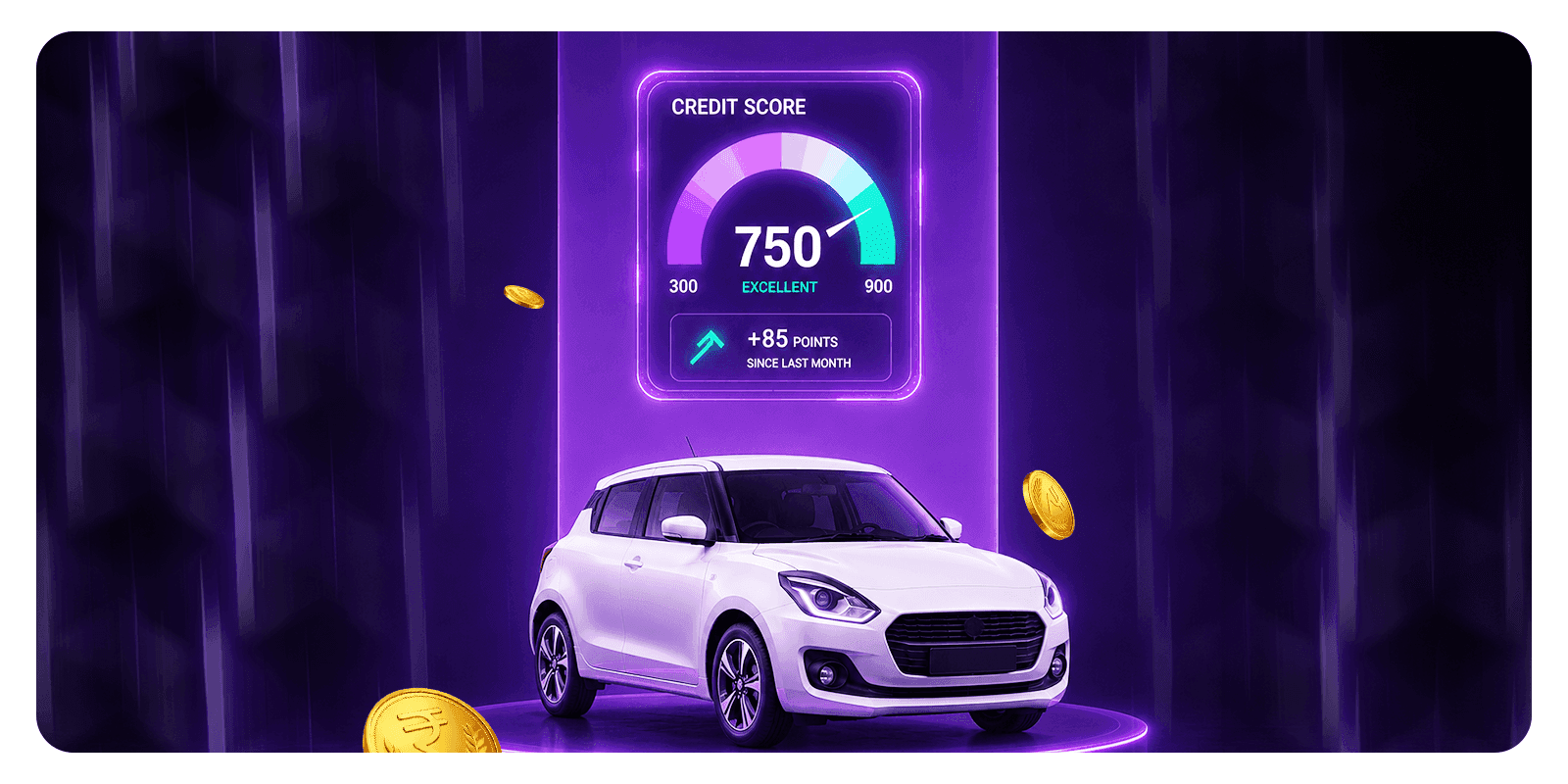
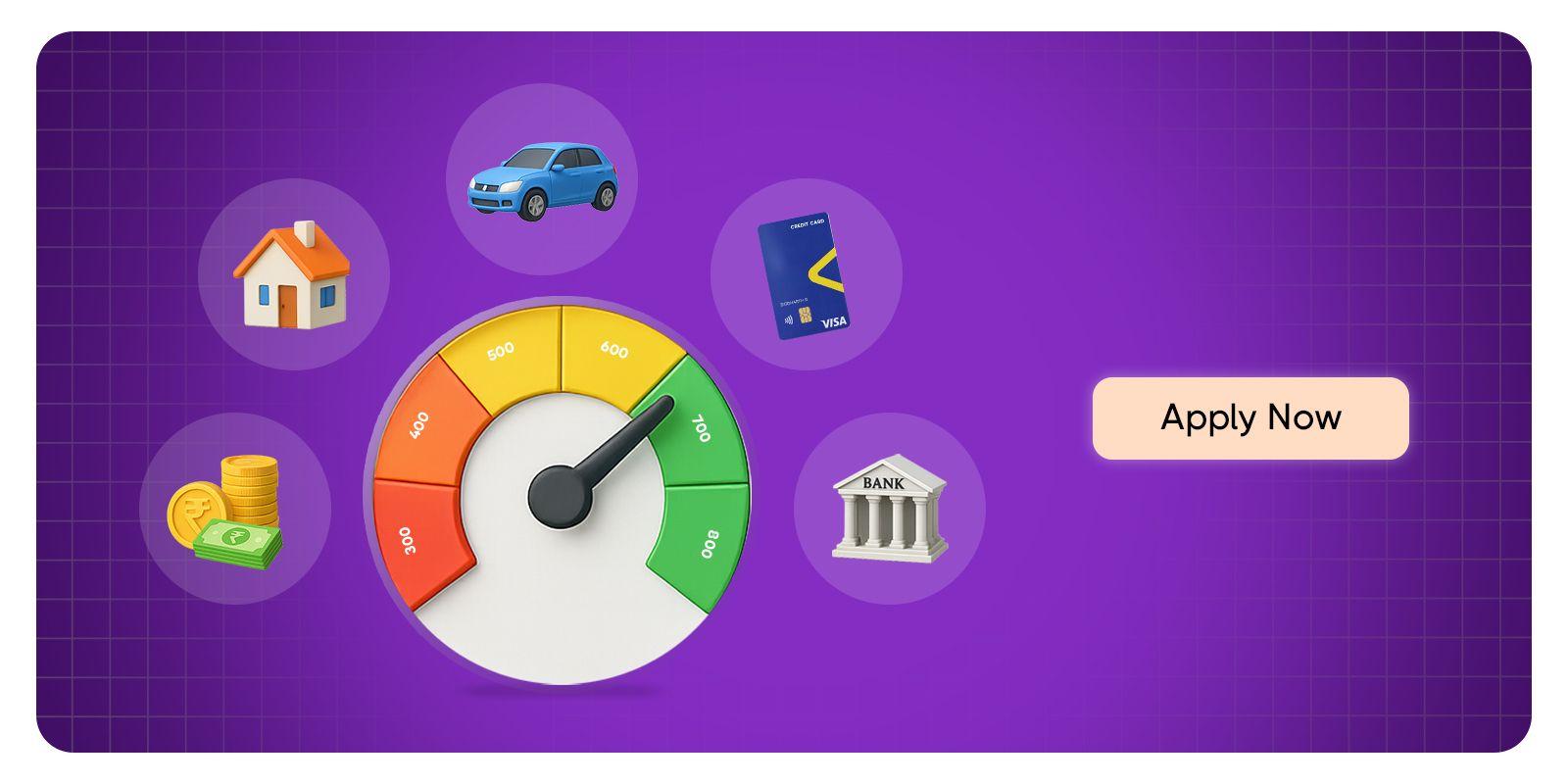
The CIBIL score demonstrates your creditworthiness through values between 300 and 900 by evaluating your payment practices, financing activities, and additional financial conduct. The assessment of lending risk to you comes from your credit score that lenders use. Your mobile loan approval success relies heavily on a CIBIL score exceeding 750 since this will result in better interest rates and flexible payment terms. Your mobile loan prospects look unfavourable when your CIBIL score falls below 600 because you will receive conditional approval at best.
Understanding the CIBIL score required for a mobile loan enables you to prepare adequately before applying for the loan. Paying debts on time and maintaining low credit utilization can improve your credit report and improve your chances of securing future loans.
Your CIBIL score remains vital for mobile loan approval since lenders depend on it before offering any mobile loan. A three-digit number is essential because it shapes your loan eligibility and conditions. Mobile loan approval typically requires a CIBIL score that reaches 750 minimum. The excellent scale of your score shows lenders you have effectively handled your credit since the numbers fall within this range. A CIBIL score of 750 or better shows lenders you are a low-risk borrower, so they will tend to approve your applications with attractive repayment options, including reduced interest rates.
Loans with better amounts and lower interest rates usually accompany people who maintain excellent CIBIL scores. Borrowers with good score ratings present reduced repayment default risk to lenders, resulting in lower operational risk. Increasing your CIBIL score gives you the advantage of faster loan application processing, making the approval process more efficient.
Each lending institution establishes its own CIBIL score requirement, determining the ideal rating. Specific lenders may provide mobile loans to candidates who achieve CIBIL ratings between 750 and their minimum preferred score, yet these borrowers often receive higher interest rates or strict loan terms.
Regularly checking your CIBIL score and maintaining a mark above 750 will increase your chances of mobile loan approval with favourable conditions. Pay your bills on time while keeping credit utilization low to ensure the best possible terms on your loan application.
Read More:: Difference Between UPI QR Code and Barcode?
When requesting approval, your selection for a mobile loan depends on your CIBIL score. Your approval opportunity with desirable terms becomes stronger with an improved CIBIL score, but you can still get a mobile loan with a lower score. For lower CIBIL Scores for mobile loan applications, most lenders use it as a key factor in their decision-making process. Based on lender standards, mobile loan applications usually need a CIBIL score of 600 to 650.
A CIBIL score between 600 and 650 signals moderate creditworthiness, allowing loan eligibility, although lenders will establish stricter lending rules. Mobile loan lenders usually react to increased risk by providing loans with higher interest costs and stricter conditions when lending money to people with lower CIBIL scores. A CIBIL score under 700 allows you to secure approval, yet the entire loan period will present additional financing expenses.
Some financial institutions use income and employment stability and total debt burden as additional evaluation factors when reviewing applicants with lower CIBIL scores. The lender will make their financing decision dependent on other factors when your CIBIL score matches or exceeds their minimum requirement.
More chances of loan approval emerge when you add supporting documents demonstrating steady income and teaming up with someone with a superior credit rating. Even if your score is lower, the CIBIL Score is required for mobile loan approval, and lenders may still consider your application cautiously with limited loan amounts and shorter repayment terms.
The best mobile loan conditions appear with a CIBIL score higher than 700, but securing this type of financing typically requires a minimum CIBIL score of 600-650.
Read More:: Amazon Pay UPI Pin Change
Your eligibility and the conditions of mobile loans depend heavily on your CIBIL score. CIBIL Score is required for mobile loan approval as it plays a key role in determining the terms and the lender's confidence in the borrower. The credit scoring system defines 750 points above as an exceptional rating, which makes mobile loans and all other loan applications favourable. A better CIBIL rating creates benefits that include approval chances, improved access to larger loan amounts, reduced interest rates, and preferable repayment methods.
People who possess an excellent CIBIL score gain lender recognition as low-risk borrowers. When you have a high score lenders tend to charge you lower interest than what they give to borrowers with average or below average rankings. Your borrowing costs will dramatically decrease when your interest rate is reduced during a loan term. When your score is higher the lenders tend to give more significant loan amounts because they believe you will succeed at loan repayment.
A good CIBIL score gives borrowers better flexibility in handling their loan terms and conditions. People with long repayment periods qualify for reduced EMI amounts that simplify their payment management. Fast loan approval becomes possible with some lenders who will accelerate their application assessment to help you receive your funds in less time.
Lenders charge lower interest costs and flexible conditions to individuals who display better credit performance according to CIBIL scores. Your CIBIL score is a significant element for loan approvals and presents an advantage for retrieving beneficial interest rates, resulting in both monetary savings and reduced stress.
Read More:: Difference Between RuPay Credit Card and Visa Credit Card
A mobile loan application becomes more difficult to approve because of a low CIBIL score. Your CIBIL score is the main criterion for lenders to judge your ability to repay loans and your financial trustworthiness. The low score indicates lenders about non-payment experiences, high debts, and financial struggles. Mobile loan approval becomes difficult to secure when you have a low CIBIL score.
Your low CIBIL score directly results in a higher chance your loan applications will get rejected. Most lenders choose to work with borrowers with strong credit marks because these applicants appear less risky. Loan applications fail when the credit score falls below the standards which lenders establish usually at 600 and lower. Getting a loan approval holds no guarantee that you will receive favourable conditions.
Mobile loans may approve you when your CIBIL score is low, yet they will apply elevated interest rates and tough repayment procedures. Lenders increase interest rates on loans to compensate for the risks when giving money to borrowers with poor credit. Higher loan costs across the loan's lifespan will make the mobile loan less sustainable as a financial choice.
Lenders tend to decrease the loan quantity because they avoid giving substantial amounts to borrowers whose CIBIL scores indicate poor creditworthiness. Users seeking mobile loans might need to give collateral or include another applicant with stronger credit report information to qualify for approval.
A low CIBIL score causes major problems for mobile loan approval and affects the loan terms, so you must enhance your credit score before seeking approval.
Read More:: How Much Money Can We Transfer Through PhonePe?
Obtaining mobile loans becomes difficult when your CIBIL score exceeds 600, although lenders still provide some opportunities to approve such requests. Financial credit providers see a poor CIBIL score as evidence that individuals have struggled with credit-related mistakes, including delayed payments and heavy debt ratios or loan defaults. Many lenders view borrowers with scores under 600 as elevated-risk applicants because they avoid approving loan applications from these groups. CIBIL Score is required for mobile loan approval, especially when aiming for favourable terms and lender confidence.
Your loan application will receive less favourable conditions because lenders need to reward themselves with more interest payments due to the perceived risk level. The loan quantity provided to you can fall below your original request amount, and the repayment duration could be shortened. The financial obligation towards your loan will probably be heavier even though lenders can grant your approval.
To access loans, some lenders ask applicants to offer supplementary paperwork, demonstrate stable income duration, have solid work experience, and have co-applicants with better credit ratings. NBFCs and digital lenders who operate in the market show flexibility by providing loans to borrowers with bad credit scores, but they apply stringent loan terms.
People who want to secure loan approval must improve their credit score before applying because scores below 600 typically receive denials from lenders. You should also investigate secured financing opportunities and borrowing possibilities from financial institutions that work with people with bad credit.
Read More:: How to add money in Phone Pe wallet?
Lenders assess mobile loan applications by examining your CIBIL score alongside other factors besides the credit score. The decision to approve or reject your mobile loan application depends heavily on your income level and current employment condition. Lenders evaluate your loan repayment capabilities by examining these factors supporting your stable financial situation.
The approval of loans relies heavily on maintaining continuous financial income. Lenders must ensure you possess sufficient financial strength to pay off your monthly loan instalment. In loan applications, your earnings play a major role in approval. Alongside CIBIL Score, mobile loan approval is usually required, although not always essential. Lenders will approve your application through a regular income stream from salary, business profits, or alternative trustworthy financial sources. Your capacity to repay is verified to them through this process.
Lenders thoroughly investigate how you are employed and check your current employment status. Borrowers who maintain stable employment earn preferential treatment from lenders since stable employment demonstrates secure work conditions and steady income flow. Reputable companies and extended employment durations at your current position make borrowers less risky to lenders. Self-employed individuals require lenders to review their financial performance and proof of continuous business stability.
A consistent income proof with an established work history will bolster the chances of loan approval despite a low CIBIL score. Your proof of steady income coupled with long employment duration might become substantial elements to get approved by lenders outside of standard credit score guidelines.
Your mobile loan application benefits from a steady income and stable employment status, compensating for a low CIBIL score when seeking approval.
Read More:: What is YBL in UPI?
Obtaining mobile loans through established banking institutions is difficult for applicants with low CIBIL scores. A CIBIL Score is required for mobile loan approval in most traditional banking scenarios, making it challenging for individuals with poor credit histories. People with poor credit histories can pursue different financial help options despite their unsatisfactory credit profiles. These subsidiary packages enable access to loans, yet they usually require unique contract terms or additional specific conditions.
People with low CIBIL scores should seek approval from non-banking financial companies (NBFCs). NBFC lenders exhibit greater flexibility regarding credit scores because they offer loan approval opportunities to applicants bearing poor CIBIL ratings. NBFC loans carry elevated interest rates since they must compensate themselves for accepting risks higher than the average. The assessment of loan terms needs extreme attention before the final agreement.
Sixty-three of the total annual interest should be paid. The process of obtaining a secured loan demands you to provide either a fixed deposit, property, or a vehicle as security to both parties. With collateral to secure their loan, the lender becomes willing to accept applicants with low CIBIL scores. But you should understand that loan default will result in losing the asset you promised as payment.
Reluctant investors run P2P lending platforms, which provide financing choices to people with poor CIBIL scores. These alternative finance systems unite users who need loans with lenders who offer loans at favourable interest rates. According to their evaluation standards, some P2P lenders show openness towards borrowers with unfavourable credit records.
Your loan application approval possibilities increase significantly when you use a co-applicant with a better credit profile. A co-applicant with an excellent CIBIL score demonstrates to lenders that debt repayments are possible, potentially leading to improved loan conditions.
Read More:: How to Check CIBIL Score on Phone Pe
Valid identity proof must be supplied by the lender. Examples of identity documents you can obtain from government authorities include: an Aadhaar card; a PAN card; a voter ID; a passport; or a driving licence. These documents are used by lenders to show the validity of the applicant's identity and help prevent fraud.
Each applicant must provide proof of their residential address. Address documents can include an Aadhaar card; a utility bill; a passport; or a rental agreement. These documents are used by lenders to confirm the applicant's physical address, and to maintain records of all communication with the applicant.
For most mobile loans, a Permanent Account Number (PAN) is often required. The PAN will allow the lender to track the borrower's financial transactions, verify the tax information for the borrower, and provide a credit rating for the borrower.
The borrower must provide the lender with information regarding their bank – such as a bank account number and bank IFSC code. The lender uses this information to remit the loan amount to the borrower and verify borrower transactions with the borrower's financial institution.
Proof of income is used by lenders to assess the borrowing capacity of the borrower. Individuals who are employed may provide different forms of proof, such as pay stubs, bank statements and primary employment certificates; while self-employed borrowers may need to provide sources of income through tax returns, business documents or other financial documents.
In order to comply with digital know your customer (KYC) regulations, many mobile lenders require a recent photograph or digital verification through a live selfie. By doing this, the lender can verify that the borrower's identity is true.
According to most lenders, a credit score can significantly influence your ability to obtain a loan. The better your credit score, the more likely you will be viewed as a good financial risk who pays their bills on time. People with good credit scores will generally be given a faster response to their loan application(s) and will likely receive the most favorable terms on their loans.
Loans will not typically be approved, if the borrower does not have a sufficient income or the income cannot be proven to exist in order to pay back the loan without causing a financial burden. A steady job with the same income from month to month is also typically a good indicator of being able to repay the loan. If you work for yourself, you may need to provide proof of stable income from your business to be considered for a mobile loan.
Those that are employees of a company, civil servant workers or members of an organisation that is well-known, are typically perceived as being less of a risk than freelancers or those that do not work for well established companies. However, some mobile loan lenders will make loans to freelancers and self-employed individuals but the self-employed will usually need to demonstrate that their income is consistent.
When you apply for a mobile loan, the lender will take into consideration your current financial obligations. Financiers will assess your current liabilities and any other financial obligations, such as current/deferred loans, credit card payments, etc. If a person's debt-to-income ratio is high, it indicates their ability to pay back their loan is limited.
Most mobile loan lenders will have an upper and lower age limit for loan applicants, typically from the ages of 21 - 60. Therefore, borrowing money from a mobile lender will be approved more frequently by individuals that are of working-age because they are more likely to have an established financial history.
Mobile phone loans have become an increasingly popular way for people to acquire a mobile device without having to pay for it all at once. Banks, non-banking finance companies (NBFCs), and digital lending services usually provide these kinds of loans, allowing customers to pay off the price of a mobile phone in installments over a certain period of time – typically monthly payments that stretch anywhere from 12 months up to 36 months. The documentation process required to obtain a mobile phone loan is quite straightforward and allows for very quick delivery of mobile phones or approval for financing with the minimum amount of paperwork needed by the lender and managed through the lender's forms and application documentation.
The applicant must provide proof of identity, including the following forms of identification: Aadhaar card, PAN card, Passport, Voter ID, and Driver’s License. Proof of identity is necessary because it is a method for the lender to verify the identity of the applicant before granting a loan. The use of these forms of identification helps prevent fraud.
In addition to proof of identity, an applicant will also need to provide proof of their current address. The lender will usually require the borrower to provide proof of address by submitting an Aadhaar card, utility bill, passport, or rental agreement. The purpose of providing proof of residence is so that the lender can determine the credibility and stability of the borrower.
Proof of income is required by lenders to determine the borrower's ability to repay the loan. If you are a salaried person, you will be asked to provide recent payslips, bank statements, or Form 16. If you are self-employed, you will need to submit bank statements, income tax returns, or evidence of business income. Most lenders, however, will not ask for extensive income documentation when applying for small mobile loans or instant funding via mobile phone.
You may also provide bank account information or recent bank statements to show the lender your financial stability and transactional history. A completed loan application and one or more passport-sized photos may also be required during the application process.
Many financial institutions now offer instant mobile loans via the internet or electronic KYC, thanks to the increasing use of digital lending. This increases speed and decreases the use of paper. The documentation needed by borrowers will differ by lender, loan amount, and the applicant's financial status.
Lenders assess several eligibility criteria before granting loans through mobile devices, in order to determine if a potential borrower is able to produce the required cash by the due date. Although the eligibility criteria for lenders differ from one lender to another, there are some fundamental guidelines that apply to them all.
Minimum age for an applicant is 18 years old, however, some lenders will only loan someone 21 or older. An applicant will need to reside in India, possess proof of identity, and provide address verification.
The most important factor in determining eligibility is employment history or a consistent income due to self-employment or wage-earning job. In addition, individuals who work full-time or have a regular source of income are more likely to be approved for a mobile loan compared to someone who just started their own business, that has a reasonably consistent monthly income with verifiable financial records.
Responsible repayment habit and credit responsibility, are typically characteristics of a good credit score. Therefore, if there is no established credit history or if the available amount of credit is too low or the repayment term is too short for a loan, many lenders will still provide mobile loans.
The length of time an applicant has remained employed and financial track record, are two more considerations that a lender will look at to determine the ability of an applicant to repay an existing loan. Lenders will also look at all financial commitments, any payment history, and complete banking transaction records, to assess the credit worthiness prior to approval. Meeting the above criteria will allow for a quicker loan process, improved loan parameters, along with a more flexible repayment plan.
Purchasing a mobile phone on a EMI (Equated Monthly Installment) helps you to split the cost of your smartphone into several parts over a fixed period of time instead of paying the full price upfront in one go. Because of the increased cost of smartphones, and the convenience of making smaller monthly payments, this is a very popular option for consumers.
EMI financing means that the lender pays for your mobile phone to the retailer on your behalf. You will then repay that amount in fixed monthly payments over a period of time (i.e., 3-24 months depending on lender's policy).
For instance, if you were to get a smartphone which cost ₹24000 using a 12-month EMI you would be required to pay back that same amount divided by 12 months + any associated interest charges or processing fees. Occasionally lenders will offer a no-cost scheme which will mean that all of the interest is discounted off or through promotional offers.
Credit Cards, Debit Cards, Consumer Durable Loans and Digital Lending Platforms all offer EMI’s on mobile phones. You can easily apply for these services; in fact, you will generally get instant approvals on most of these forms.
The knowledge of the minimum CIBIL Score needed for mobile loan approval matters to all potential loan applicants. A mobile loan becomes easier if your CIBIL score reaches 750 and above. Mobile loan options for customers showcase improved interest rates, enhanced loan sizes, and adjustable payment terms when their CIBIL score exceeds the desired threshold. Lenders trust the borrower with loan repayment following good credit management, as demonstrated in their CIBIL score.
Mobile loans are available to borrowers whose CIBIL score ranges from 600 to 750, although they will likely receive unfavourable loan conditions. A worse credit score forces borrowers to accept loans with increased interest costs and smaller funding amounts. Higher risk assessments cause lenders to implement additional demanding requirements for the client. Medical loans become challenging to obtain when a person maintains a CIBIL score lower than 600. Most financial institutions deny mobile loan applications because they identify the borrower as high-risk.
Individuals with poor CIBIL scores still have several financing possibilities available to them. Competitive mobile loans and secured loans can be obtained through NBFCs and peer-to-peer platforms, but lenders add increased conditions to these types of loans and charge higher interest rates.
Understanding the required CIBIL Score threshold for a mobile loan lets you plan your improvement work. A good CIBIL score combined with a stable job and consistent income improves your chances of securing loans with advantageous terms.
The minimum CIBIL score required to approve a mobile loan application is 750. People with an excellent credit history can expect a low-risk profile when their CIBIL score falls between 750 and above. Having a CIBIL score beyond 750 will increase your chances of getting financial approval for a loan with an improved interest rate, more significant financing, and extended payment terms.
It is difficult to get mobile loans if your CIBIL score is below 600, although approval possibilities still exist. Scoring under 600 makes lenders consider you high-risk; thus, they either decline your loan application or charge very elevated interest rates. The lending networks of NBFCs, along with digital lenders and peer-to-peer platforms, tend to extend financial support to applicants with substandard CIBIL scores.
The mobile loan approval process depends heavily on your current income and employment status. Your prospects of getting a mobile loan improve significantly with stable financial status and consistent employment, even when your CIBIL score is low.
A co-applicant who maintains excellent CIBIL marks is key when getting mobile phone financing. A joint application with a co-applicant with a good credit history will help compensate for a bad credit score. When you apply with a co-applicant with a strong credit history and a stable income, the lender will increase your loan chances and potentially offer more favourable terms, including better interest rates and higher loan amounts.
The improvement of your CIBIL score depends on multiple essential steps. The most critical step is completing timely payments toward all credit cards and loans. Any delay in your payment activities significantly influences how your score is determined. Minimizing your credit card debt while managing your credit utilization ratio at a 30% level or less represents essential steps for score improvement.



Contact

care@zetapp.in
Social


Build and Maintain a 750+ Credit Score